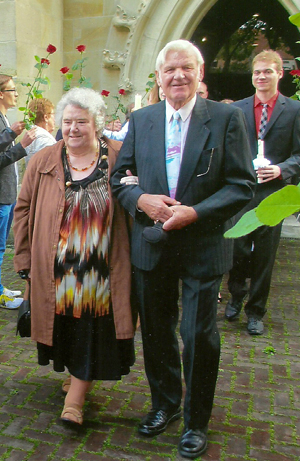
Andreas Georg Gottfried Leistikow son of Otto and Charlotte Leistikow was born in 1938, in the village of Labenz, County (Kreis) Dramburg, in the country Pomerania that is now part of Poland.
Siegrun Charlotte Maidorn, daughter of Gotthard and Charlotte Maidorn was born in 1940 in Kauder, County Jauer, located in Schlesien that is now part of Poland.
Andreas married Siegrun in 1962, and they had seven children.
|
|
|
|
Andreas went through some hard times as a child. Witnessed horrid, evil things. Somehow, he seems to have come through it undamaged. His songs and poems reflect a kind, gentle soul. He has documented these childhood years in My Life as a Child. He has also documented other memories and family stories.
Siegrun also experienced difficult and traumatic times as a child during World War II and in the following years. She was reluctant to document these years, as many of her memories were quite painful. However, in the end, she decided there would be value to future generations if what she and her family experienced was also documented, which she has done in My Life 1940-2014.
Andreas and Siegrun met in 1960 in Nottuln, Germany, the town to which both their families were relocated after World War II, and in which they currently reside. At that time, Siegrun was working as a medical assistant, and Andreas was finishing a stint in the German Army. Andreas later worked in agriculture, and then worked for many years as an employee of the post office. In retirement, Andreas participates in periodic gatherings of people who were also expelled from the Labenz area after the war. He is also an active researcher regarding his family history.
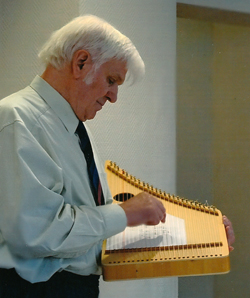
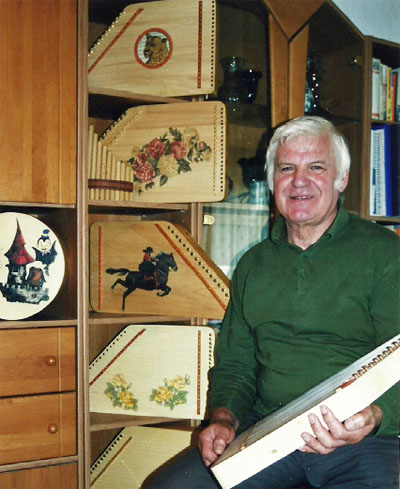
Andreas has always been passionate about music. In addition to building the 'cymbol' instruments, he writes songs and lyrics.You can view some music videos recorded by Andreas here.
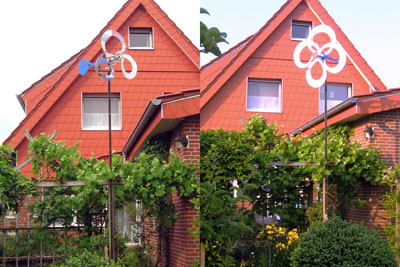
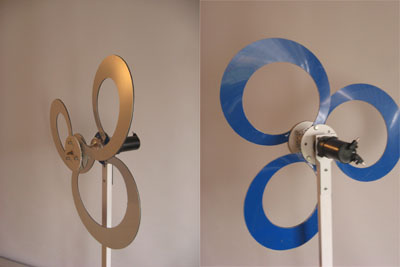
Andreas is also an inventor. Most recently he has invented a wind generator using a 'loopwing' rotor of his own design. In addition to having a higher efficiency than a straight blade rotor, it takes up less space and the rotors are less dangerous.
|
|
In the summer of 2018, Andreas, returned to Labenz with some of his family members. That trip is documented by Andreas here.
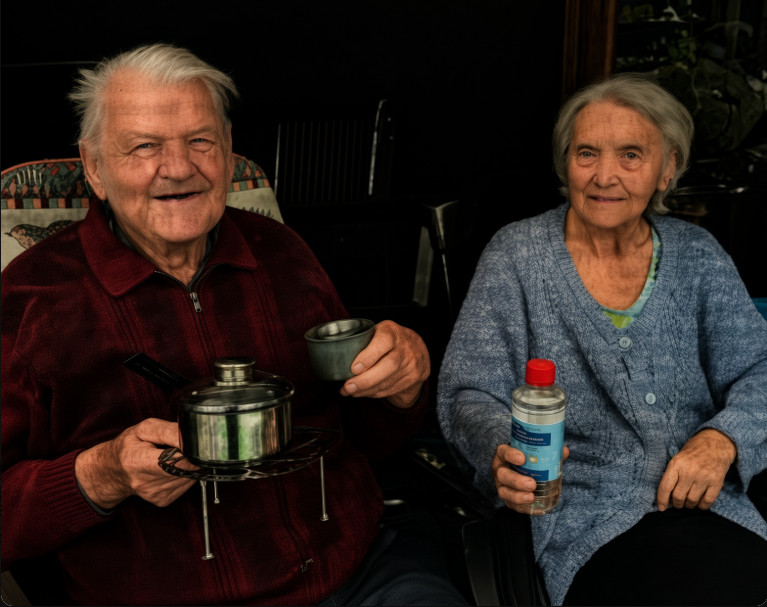
Since Russia's invasion of Ukraine, Andreas has led a volunteer campaign building and shipping emergency cookers to Ukraine. The idea grew out of a simple worry: how would his own family manage if the war reached Germany? They laid in canned food for a short emergency, but had no way to cook it — until, at a bicycle dealer's, he noticed a bin of discarded, worn brake discs and saw the answer. He had three nuts welded to the underside of a disc, screwed in carriage bolts as legs, and the first cooker was done; for fuel, he adapted the same kind of paste used in the flame containers under warming trays in restaurants.
|
A network of volunteers has kept the campaign running ever since — bicycle shops collect the brake discs, workshops donate welding work, and drivers carry finished cookers to collection points for shipment — with donations administered through the Nottuln peace initiative (Friedensinitiative Nottuln e.V.). Andreas later added a second item to the shipments: inflatable "emergency cushions" made from juice pouches, sturdy enough to double as a seat cushion or pillow, particularly useful for soldiers and others in cold trenches and dugouts.
By August 2026 the campaign had delivered roughly 5,500 cookers and 100,000 cans of fuel paste to Ukraine, funded by about €45,000 in donations. "It's only a drop in a hot stone," Andreas says of the effort, "but still I'm glad to have helped, in some small way, both the soldiers at the front and the civilian population." In October 2024, he and fellow volunteer Norbert Wienke received the special recognition prize of the Paritätischer Wohlfahrtsverband NRW welfare association for the project, worth €25,000, with several thousand euros more raised on the spot at the award ceremony.
By mid-2026 the campaign's own donation fund had nonetheless run dry, and Andreas, then 88, had come close to ending the effort — "I had already become a bit resigned," he admitted — until a newspaper report about the campaign that June sparked a fresh wave of giving. Siegrun has remained closely involved in the work throughout. Separately, the company Firma Rinklake donated ten thousand bottles of plant-based disinfectant, arranged through the Rheine-based Ukraine-aid charity Blau-Gelbes Kreuz — because the disinfectant is ethanol-based, it doubles as fuel for the cookers as well as for hygiene. Andreas has also received direct thanks from Ukrainian soldiers using the cookers at the front, including a message from the 14th Separate Rifle Battalion crediting his heating cans with keeping them warm in their dugouts and trenches through the cold nights.